¥410.00 CNY
单瓶(30 份食用份量)
产品代号(SKU): CN13061US
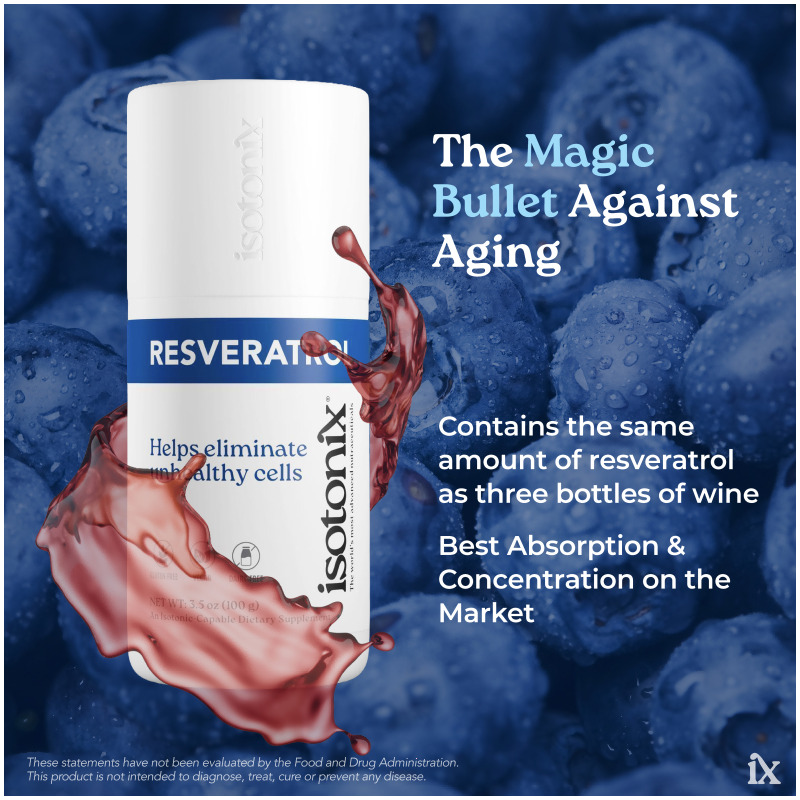
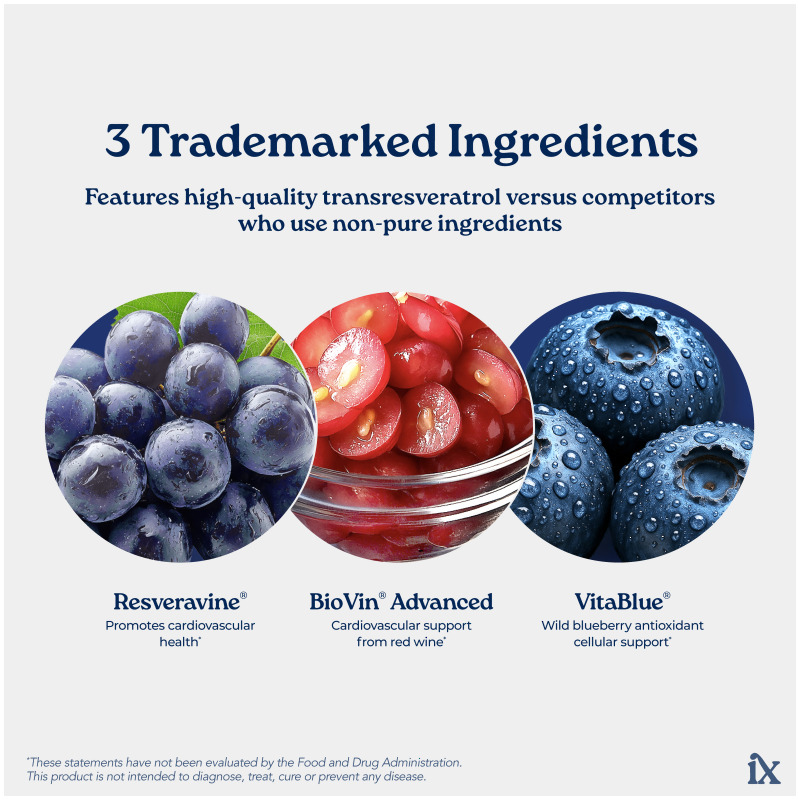
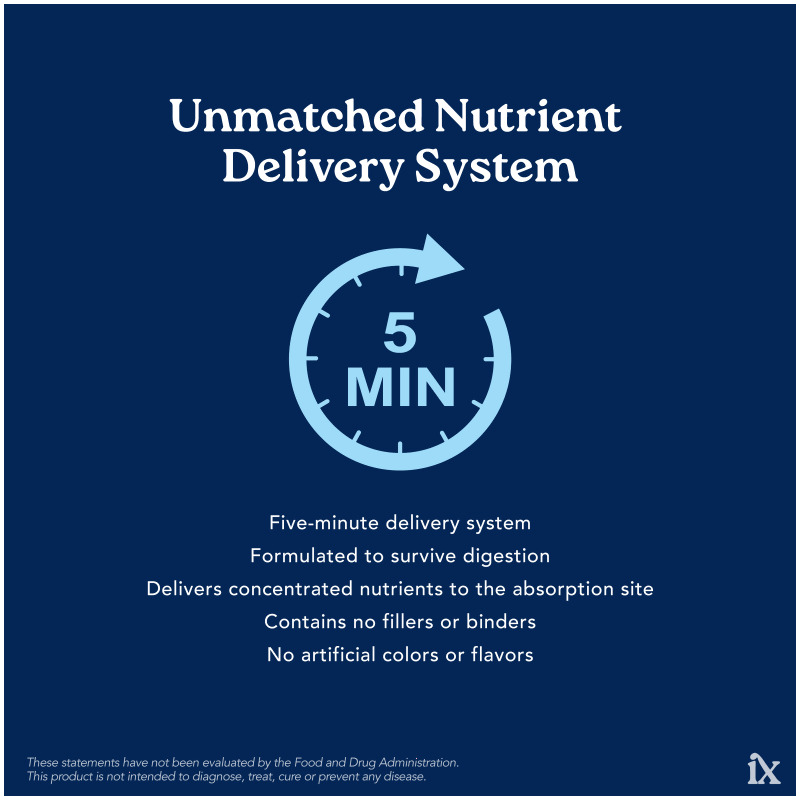
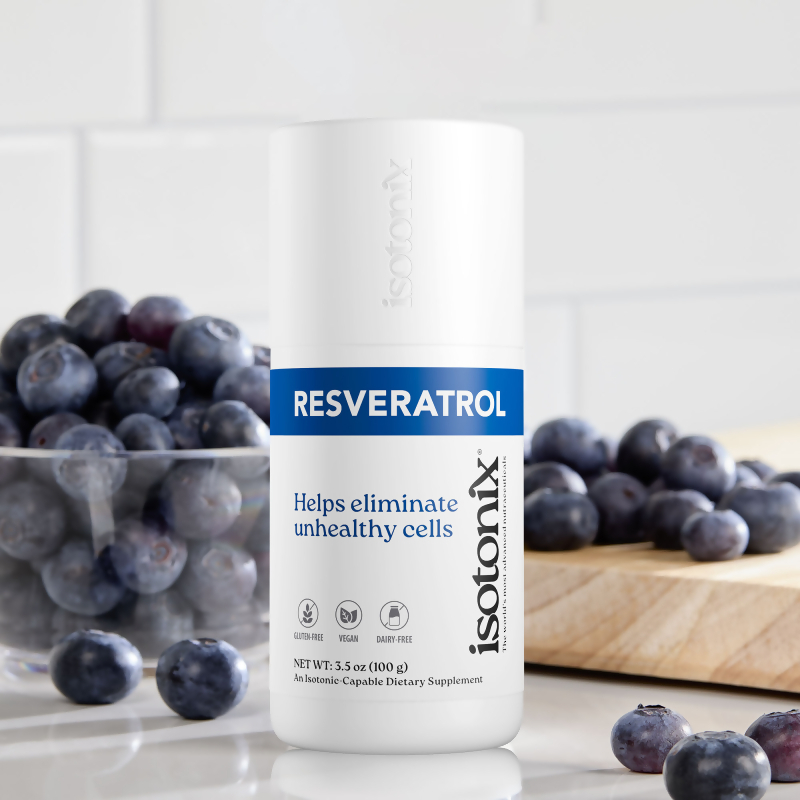
Isotonix白藜芦醇配方粉末是一款具有等渗功能的营养补充品,采用三种持有专利的成分制成:含有 20% 白藜芦醇萃取物的Resveravine、含有 5% 白藜芦醇萃取物的 BioVin Advanced 以及可促进正常细胞健康水平的 VitaBlue(野蓝莓萃取物)。Isotonix白藜芦醇配方粉末可保持细胞健康,促进正常的细胞周期活动,加强心血管健康,增进健康的血小板活动,改善血管舒张,提供抗氧化保护。Resveravine 结合了 反式 白藜芦醇(20% 纯度)和萃取自葡萄藤的 葡萄素 ,它们协同作用,加强白藜芦醇萃取物的效能。 反式白藜芦醇 是红酒葡萄和葡萄汁中占主导地位的异构体,而 Resveravine 中的 反式 白藜芦醇浓度比来自葡萄皮的其他产品高出 100-300 倍。俄勒冈州立大学莱纳斯鲍林研究所的研究表明,反式白藜芦醇可能比白藜芦醇的其他异构体具备更高生物可用性。Resveravine 提供更高水平的自由基屏障,对抗氧化压力,与纯白藜芦醇萃取物相比,可更加有力地促进细胞的正常活动,提高氧化保护。Isotonic 的意思是“相同压力(等渗)”,即与人体的血液、血浆及眼泪拥有相同的化学特质。人体内的所有液体均拥有特定的浓度,称为渗透压。人体的一般渗透压是等渗的,这使身体组织得以维持稳定的状态。物质要被人体吸收并参与人体新陈代谢,就必须采用等渗状态。Isotonix 膳食补充品便以等渗溶液方式传输。这意味着人体可轻松地实现营养成分的最佳吸收效果。该液体的等渗压让营养能进入小肠并快速被血液吸收。服用 Isotonix 产品,损失的营养成份非常少,营养吸收极为快速,可实现最大功效。
查看详细信息好处
- 支援心血管健康
- 强效抗氧化物并拥有高ORAC值
- 可有助维持细胞健康
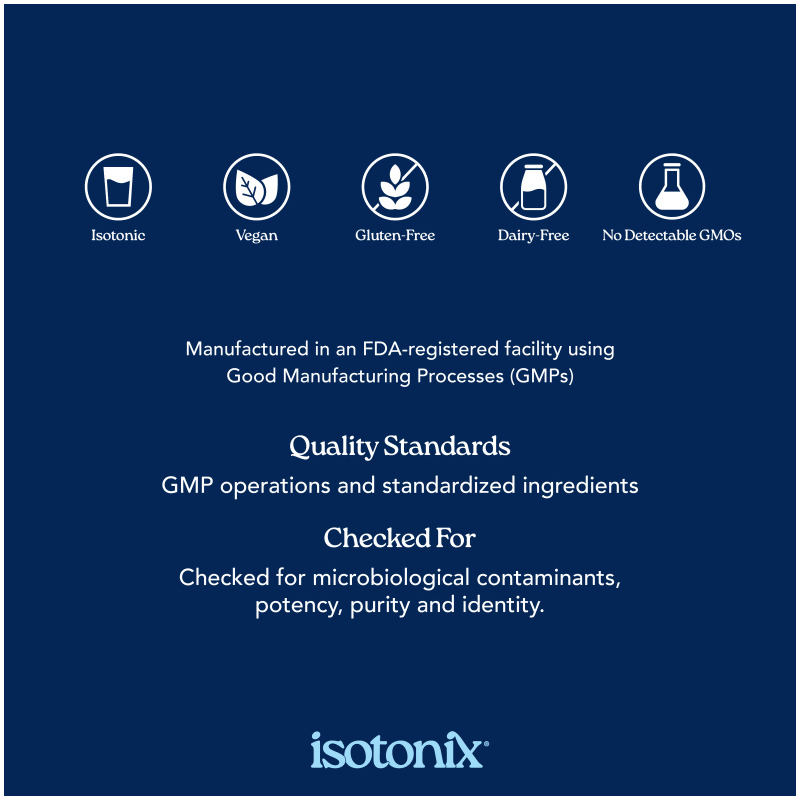
不含可检测出之基改成分(GMO) — 本产品不含可检测出之基因改造生物成分
素食产品 — 本产品为素食产品
等渗透压营养保健产品 — 能让身体快速吸收的可饮用液状营养保健品;个人效果可能不同
* 美国食品药物管理局(FDA)将含有少于20PPM麸质的制成产品列为不含麸质
详细信息
了解更多
成分
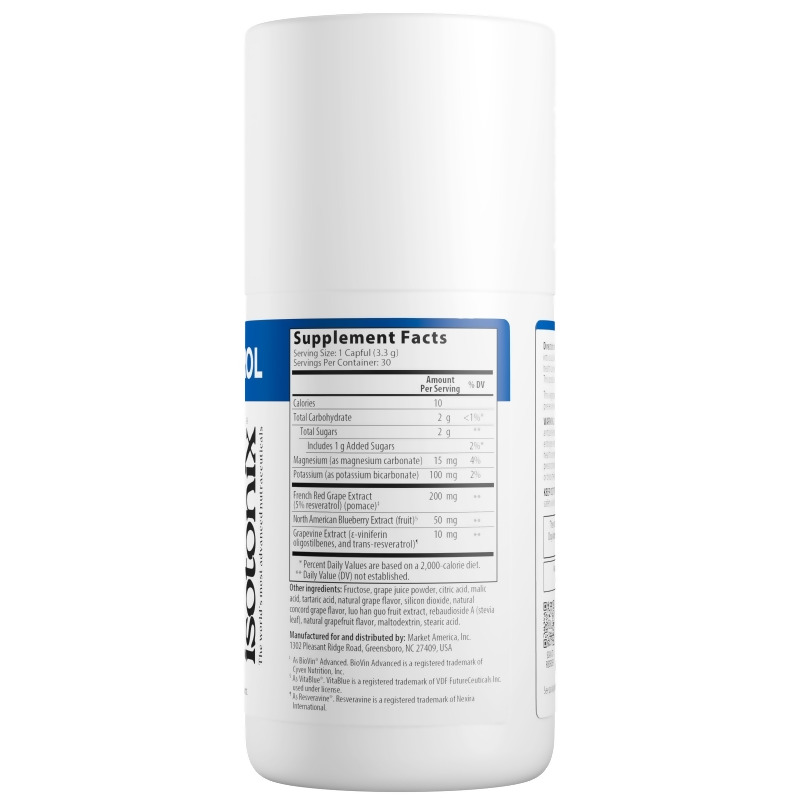
白藜芦醇是红酒内的天然抗氧化物。 Resveravine 是葡萄的一种天然萃取物,按标准含有 20% 白藜芦醇低聚体类似物 ,含反式白藜芦醇的浓度较其他葡萄皮造成的产品高出许多。 Resveravine 提供抗氧化保护,促进正常的血小板活动、血管舒张及血液流动,这一切都能支援心血管健康。
作为另类的策略,有新研究专注于限制热量的发展上,专门研究透过挑选出受限制热量影响的新陈代谢及压力反应途径来模拟限制热量的效应,但不限制热量摄取。白藜芦醇被视为潜在的限制热量类似物质。
给老鼠喂食白藜芦醇大大增加其有氧代谢能力。白藜芦醇促进健康的粒线体功能,并支援能量消耗,借 此 促进健康体重。一项对高热量饮食老鼠的在活体内测试显示, 白藜芦醇 使 高热量饮食的中年老鼠的生理状况变 得 像一般热量饮食的老鼠一样,并促进 其 整体健康。
BioVin Advanced ( 含 5% 白藜芦醇的法国红酒萃取物 )
含有原花色素( OPC )的红酒萃取物,透过支援正常的血液循环、巩固血管壁及促进正常的血小板活动,对支援心血管健康极为有效。 BioVin Advanced 能提供原花色素及白藜芦醇。红酒葡萄有两种主要成份显示拥有强效抗氧化能力:红酒多酚类(类黄酮)及反式白藜芦醇(以上曾提及)。原花色素是类黄酮复合物,能作为人体内超强的抗氧化物。 BioVin Advanced 结合原花色素及反式白藜芦醇的抗氧化特质,以促进第二期代谢作用酵素,这些酵素参与人体细胞的解 毒 作用, 并参与清除 自由基特质。
VitaBlue 野生蓝莓萃取物( 12.5% 花青素 )
在众多水果及蔬菜中,蓝莓的氧自由基吸收能力为排行最高,它含有 25-30 种不同的花青素。花青素给予蓝莓(及其他水果)丰富的蓝及红色,是强效的类黄酮抗氧化物。花青素的作用机制曾在 分 子层面 被研究过 。蓝莓提供大量绿原酸,绿原酸被认为对促进细胞健康非常重要。 VitaBlue 野生蓝莓萃取物支援人体的环氧化酶 2 ( COX-2 )抑制剂,并提供比新鲜蓝莓能提供的更大量强效抗氧化物。 VitaBlue 野生蓝莓萃取物显示对促进心血管健康有效,并能促进 正常细胞周期 的 活动 ,及维持整体细胞健康。
常见问题
是。 Isotonix白藜芦醇冲饮不含酒精成份。
我目前正在服药控制胆固醇。我依然能够服用白藜芦醇吗?
目前没有任何记录表明胆固醇药物与白藜芦醇中的任何成分存在反应。但是,在服用任何自然补充品之前,请先咨询您的医师。
谁应该服用此产品?
临床研究表明白藜芦醇萃取物有助于维持正常的细胞周期活动,从而维持整体的细胞健康。如果您有兴趣促进细胞健康并维持良好的心血管健康,Isotonix白藜蘆醇配方粉末是您绝佳的选择。
Isotonix白藜芦醇配方粉末是否有服用禁忌?
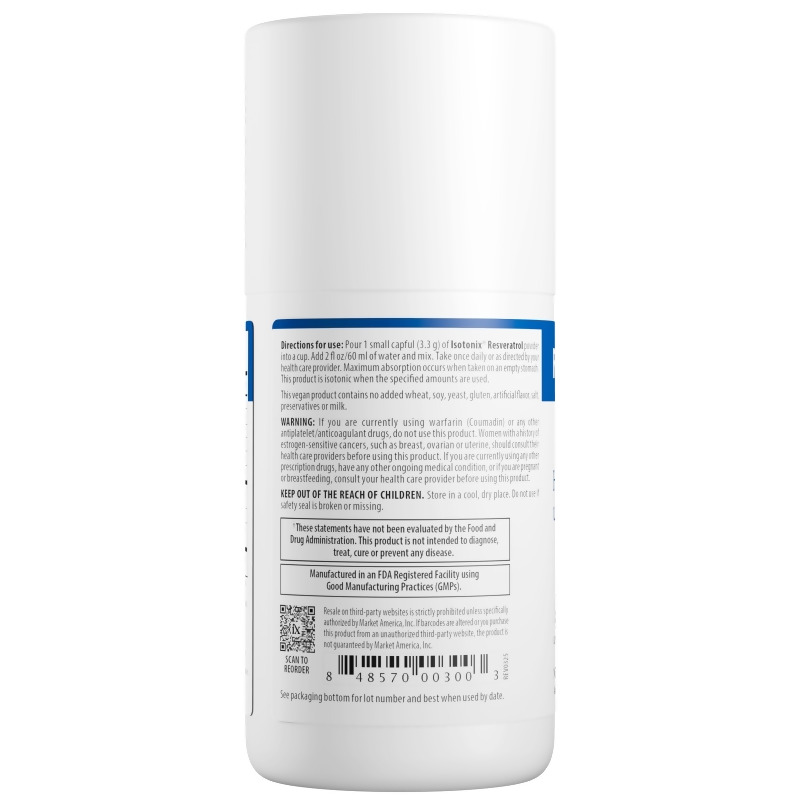
是的。如果您当前正在服用华法林(香豆素)或任何抗血小板/阻凝剂等药物,那么您不应该服用此产品。如果您正在服用单胺氧化酶抑制 (MAOI) 药物,那么您不应该服用此产品。有雌激素敏感型癌症(例如乳腺癌、卵巢癌和子宫癌)病史的妇女不应该服用此产品。如果您正在服用任何其他处方药,或长期服用某种药物,则应在使用此产品前咨询您的医师。处于孕期或哺乳期的妇女不应使用本产品。
我已在服用综合维他命。为什么还需要白藜芦醇?
白藜芦醇不是综合维他命。此产品旨在促进更好的细胞健康并维持心血管健康。
如果我酗酒,是否依然可以服用白藜芦醇(尽管其来源于红酒)?
是的。Isotonix白藜芦醇配方粉末不含有酒精。白藜芦醇是用于酿制红酒的葡萄皮和葡萄藤中的萃取物。*
服用白藜芦醇会让我有喝醉的感觉吗?
不会,Isotonix白藜芦醇配方粉末不含有酒精。
此产品是否不含谷蛋白?
是的。
此产品是否适用于素食主义者?
是的。Isotonix白藜芦醇配方粉末为素食产品。
男人和女人都能服用此产品吗?
是的。但是,有雌激素敏感型癌症(例如乳腺癌、卵巢癌和子宫癌)病史的妇女不应该服用此产品。处于孕期或哺乳期的妇女不应使用本产品。
如果我服用此产品,那还需要服用 OPC-3 吗?
Isotonix OPC-3 是对健康有很多好处的强效抗氧化剂。Isotonix白藜芦醇配方粉末可以与其他抗氧化剂一同服用;实际上,抗氧化剂以多种机制发挥效用,它们可以相辅相成。如需全面且完整的抗氧化防御,同时服用 OPC-3 和白藜芦醇是明智的选择,可以保护您的身体免遭自由基的损害。
科学
- Aggarwal B et al. Role of resveratrol in prevention and therapy of cancer: preclinical and clinical studies. Anticancer Research. 24(5A):2783-840, 2004.
- Bauer, J. H., et al. An accelerated assay for the identification of lifespan-extending interventions in Drosophila melanogaster. Proc Natl Acad Sci U S A. 101:12980-12985, 2004.
- Baur J et al. Resveratrol improves health and survival of mice on a high-calorie diet. Nature. 444(7117):337-42, 2006.
- Belguendouz, L., et al. Resveratrol inhibits metal ion-dependent and independent peroxidation of porcine low-density lipoproteins. Biochemical Pharmacology. 53(9):1347-1355, 1997.
- Bhat K et al. Biological effects of resveratrol. Antioxidants and Redox Signaling. 3(6):1041-64, 2001.
- Review. Borra M et al. Mechanism of human SIRT1 activation by resveratrol. Journal of Biological Chemistry. 280(17):17187-95, 2005.
- Chen Y. Resveratrol-induced cellular apoptosis and cell cycle arrest in neuroblastoma cells and antitumor effects on neuroblastoma in mice. Surgery.136(1):57-66, 2004.
- Dario et al. Resveratrol prolongs life span and retards the onset of age-related markers in a short-lived vertebrae. Current Biology, 2006.
- Ding, X. Z., et al. Resveratrol inhibits proliferation and induces apoptosis in human pancreatic cancer cells. Pancreas. 25(4):71-76, 2002.
- Dong Z. Molecular mechanism of the chemopreventive effect of resveratrol. Mutation Research. 523-524:145-150, 2003.
- Donnelly L et al. Anti-inflammatory Effects of Resveratrol in Lung Epithelial Cells: Molecular Mechanisms. Am J Physiol Lung Cell Mol Physiol, 2004 .
- Faria A et al. Antioxidant properties of prepared blueberry (Vaccinium myrtillus) extracts. Journal of Agricultural and Food Chemistry. 53(17):6896-902, 2005.
- Frémont L. Biological effects of resveratrol. Life Sciences 66:663-673, 2000.
- Fremont, L., et al. Antioxidant activity of resveratrol and alcohol-free wine polyphenols related to LDL oxidation and polyunsaturated fatty acids. Life Sciences. 64(26):2511-2521, 1999.
- Garvin S et al. Resveratrol induces apoptosis and inhibits angiogenesis in human breast cancer xenografts in vivo. Cancer Letters. 231(1):113-22, 2006.
- Goh S et al. The red wine antioxidant resveratrol prevents cardiomyocyte injury following ischemia-reperfusion via multiple sites and mechanisms. Antioxidant Redox Signal. 9(1):101-13, 2007.
- Hao H et al. Mechanisms of cardiovascular protection by resveratrol. Journal of Medicinal Food. 7(3):290-298, 2004.
- Heynekamp J et al. Substituted trans-stilbenes, including analogues of the natural product resveratrol, inhibit the human tumor necrosis factor alpha-induced activation of transcription factor nuclear factor kappaB. Journal of Medicinal Chemistry. 49(24):7182-9, 2006.
- Holmes-McNary M and Baldwin A Jr. Chemopreventive properties of trans-resveratrol are associated with inhibition of activation of the IkappaB kinase. Cancer Research. 60:3477-3483, 2000.
- Hou D et al. Molecular Mechanisms Behind the Chemopreventive Effects of Anthocyanidins. Journal of Biomedicine and Biotechnology. 2004: (5):321-325, 2004.
- Hou D. Potential mechanisms of cancer chemoprevention by anthocyanins. Current Molecular Medicine. 3(2):149-159, 2003.
- Howitz, K. T., et al. Small molecule activators of sirtuins extend Saccharomyces cerevisiae lifespan. Nature. 425(6954):191-6, 2003.
- Hung L et al. Cardioprotective effect of resveratrol, a natural antioxidant derived from grapes. Cardiovascular Research. 47:549-555, 2000.
- Hung L et al. Resveratrol protects myocardial ischemia-reperfusion injury through both NO-dependent and NO-independent mechanisms. Free Radicals in Biology and Medicine. 36(6):774-81, 2004.
- Hwang J et al. Resveratrol induces apoptosis in chemoresistant cancer cells via modulation of AMPK signaling pathway. Annals NY Academy of Sciences. 1095:441-8,2007.
- Ignatowicz E and Baer W. Resveratrol, a natural chemopreventive agent against degenerative diseases. Polish Journal of Pharmacology. 53(6):557-69, 2001. Jang M et al. Cancer chemopreventive activity of resveratrol, a natural product derived from grapes. Science. 275:218-220, 1997.
- Jang M et al. Cancer chemopreventive activity of resveratrol. Drugs in Experimental Clinical Research. 25:65-77, 1999.
- Kaeberlein M et al. Substrate-specific activation of sirtuins by resveratrol. Journal of Biological Chemistry. 280(17):17038-45, 2005.
- Kim, Y. A., et al. Antiproliferative effect of resveratrol in human prostate carcinoma cells. Journal of Medicinal Food. 6(4):273-280, 2003.
- Kopp P. Resveratrol, a phytoestrogen found in red wine. A possible explanation for the conundrum of the 'French paradox'? European Journal of Endocrinology. 138(6):619-620, 1998.
- Kundu, J. K., et al. Resveratrol inhibits phorbol ester-induced cyclooxygenase-2 expression in mouse skin: MAPKs and AP-1 as potential molecular targets. Biofactors. 21(1-4):33-39, 2004.
- Lagouge M et al. Resveratrol improves mitochondrial function and protects against metabolic disease by activating SIRT-1 and PGC-1alpha. Cell. 127(6):1109-22, 2006.
- Lepoivre M et al. Resveratrol, a remarkable inhibitor of ribonucleotide reductase. FEBS Letters. 421:277-279, 1998. Lin J et al. Chemoprevention of cancer and cardiovascular disease by resveratrol. Proceedings of the National Science Council Republic of China. 23(3):99-106, 1999.
- Review. Manna S et al. Resveratrol suppresses TNF-induced activation of nuclear transcription factors NF-kappaB, activator protein-1 and apoptosis: potential role of oxygen intermediates and lipid peroxidation. Journal of Immunology. 164(12):6509-6516, 2000.
- Manna S et al. Resveratrol suppresses TNF-induced activation of nuclear transcription factors NF-kappaB, activator protein-1 and apoptosis: potential role of oxygen intermediates and lipid peroxidation. Journal of Immunology. 164(12):6509-6516, 2000.
- Martín A et al. Resveratrol, a polyphenol found in grapes, suppresses oxidative damage and stimulates apoptosis during early colonic inflammation in rats. Biochemical Pharmacology. 67(7):1399-410, 2004.
- Martín A et al. The effects of resveratrol, a phytoalexin derived from red wines, on chronic inflammation induced in an experimentally induced colitis model. British Journal of Pharmacology. 147(8):873-85, 2006.
- Martinez J and Moreno J. Effect of resveratrol, a natural polyphenolic compound, on reactive oxygen species and prostaglandin production. Biochemical Pharmacology. 59:865-870, 2000.
- Mgbonyebi O. Antiproliferative effect of synthetic resveratrol on human breast epithelial cells. International Journal of Oncology. 12(4):865-869, 1998.
- Nielsen M et al. Resveratrol reverses tumor-promoter-induced inhibition of gap-junctional intercellular communication. Biochemical and Biophysical Research Communications. 275:804-809, 2000.
- Olas B and Wachowicz B. Resveratrol and vitamin C as antioxidants in blood platelets. Thrombosis Research. 106(2):143-8, 2002.
- Olas B and Wachowicz B. Resveratrol reduces oxidative stress induced by platinum compounds in blood platelets. General Physiology and Biophysics. 23(3):315-26, 2004.
- Olas B et al. Effect of resveratrol, a natural polyphenolic compound, on platelet activation induced by endotoxin or thrombin. Thrombosis Research. 107(3-4):141-5, 2002.
- Olas B et al. Resveratrol protects against peroxynitrite-induced thiol oxidation in blood platelets. Cellular and Molecular Biology Letters. 9(4A):577-87, 2004.
- Pace-Asciak C et al. The red wine phenolics trans-resveratrol and quercetin block human platelet aggregation and eicosanoid synthesis: implications for protection against coronary heart disease. Clin Chim Acta. 235:207-219, 1995.
- Picard F et al. Sirt1 promotes fat mobilization in white adipocytes by repressing PPAR-gamma. Nature. 429(6993):771-776, 2004.
- Porcu M et al. The emerging therapeutic potential of sirtuin-interacting drugs: from cell death to lifespan extension. Trends in Pharmacological Sciences 26, 2005. Pozo-Guisado, E., et al. Resveratrol-induced apoptosis in MCF-7 human breast cancer cells involves a caspase-independent mechanism with downregulation of Bcl-2 and NF-kappaB. International Journal of Cancer 115(1):74-84, 2005.
- Provinciali M et al. Effect of resveratrol on the development of spontaneous mammary tumors in HER-2/neu transgenic mice. International Journal of Cancer. 115(1):36-45, 2005.
- Sato M et al. Journal of Cardiovascular Pharmacology. 35(2):263-268, 2000.
- Schneider Y et al. Anti-proliferative effect of resveratrol, a natural component of grapes and wine, on human colonic cancer cells. Cancer Letters. 158(1):85-91, 2000.
- Sinclair D et al. Resveratrol improves health and survival of mice on a high-calorie diet. Nature, 2006.
- Sovak M. Grape extract, resveratrol, and its analogs: a review. Journal of Medicinal Food. 4(2):93-105, 2001.
- Subbaramaiah K et al. Resveratrol inhibits cyclooxygenase-2 transcription and activity in phorbol ester-treated human mammary epithelial cells. Journal of Biological Chemistry. 273:21875-21882, 1998.
- Subbaramaiah K et al. Resveratrol inhibits cyclooxygenase-2 transcription in human mammary epithelial cells. Annal NY Academy Sciences. 889:214-223, 2000.
- Szende B et al. Dose-dependent effect of resveratrol on proliferation and apoptosis in endothelial and tumor cell cultures. Experimental and Molecular Medicine. 32(2):88-92, 2000.
- Tsai S et al. Suppression of nitric oxide synthase and the down-regulation of the activation of NF-kappaB in macrophages by resveratrol. British Journal of Pharmacology 126:673-680, 1999.
- Wang Z et al. Effects of red wine and wine polyphenol resveratrol on platelet aggregation in vivo and in vitro. International Journal of Molecular Medicine. 9(1):77-9, 2002.
- Yi W et al. Phenolic compounds from blueberries can inhibit colon cancer cell proliferation and induce apoptosis. Journal of Agricultural and Food Chemistry 53(18):7320-9, 2005. Zou J et al.
- Effect of red wine and wine polyphenol resveratrol on endothelial function in hypercholesterolemic rabbits. Int J Mol Med. 11(3):317-20, 2003.
- Zou J et al. Suppression of mitogenesis and regulation of cell cycle traverse by resveratrol in cultured smooth muscle cells. International Journal of Oncology. 15:647-651, 1999.